
Dental implants in Marbella
We replace missing teeth with a fixed solution, planned digitally before we enter theatre.
What are dental implants?
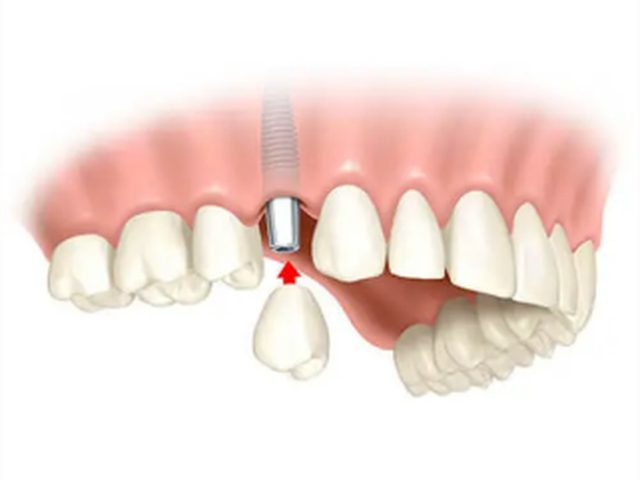
A dental implant is an artificial root, made of titanium or zirconia, that integrates into the jawbone and replaces the root of a lost tooth. A custom crown is then fitted on top, designed to blend naturally with the rest of your smile.
Unlike a removable denture, an implant does not rest on the gum: it is anchored in the bone. That changes the sensation when chewing entirely, and it avoids grinding down the neighbouring teeth, which a conventional bridge requires.
Does getting an implant hurt?
No. Digital planning allows for minimally invasive surgery: before the procedure we design a custom surgical guide for your mouth that shows, to the millimetre, where each implant goes. That means much smaller incisions and no large flaps.
Most of our patients describe the experience as easier than they expected, with a fast, controlled recovery. For anyone with dental anxiety, we offer different levels of conscious sedation.
Who can have implants?
Almost any adult with healthy gums. Age on its own is not a contraindication. Nor is a lack of bone, these days: bone regeneration, sinus lift and zygomatic implant techniques make it possible to treat cases that were considered unviable a few years ago.
We carry out a full study before proposing any treatment. If your case does not call for implants, we will say so and suggest the appropriate alternative.
-
Chewing function
You can bite and chew normally again, with no restrictions on your diet.
-
Natural appearance
The crown is designed around your shape, shade and proportions, in harmony with your face.
-
Stable and comfortable
Nothing moves or comes loose. Cared for like a natural tooth, with hygiene and check-ups.
At this clinic
How we handle implants at our Marbella clinic
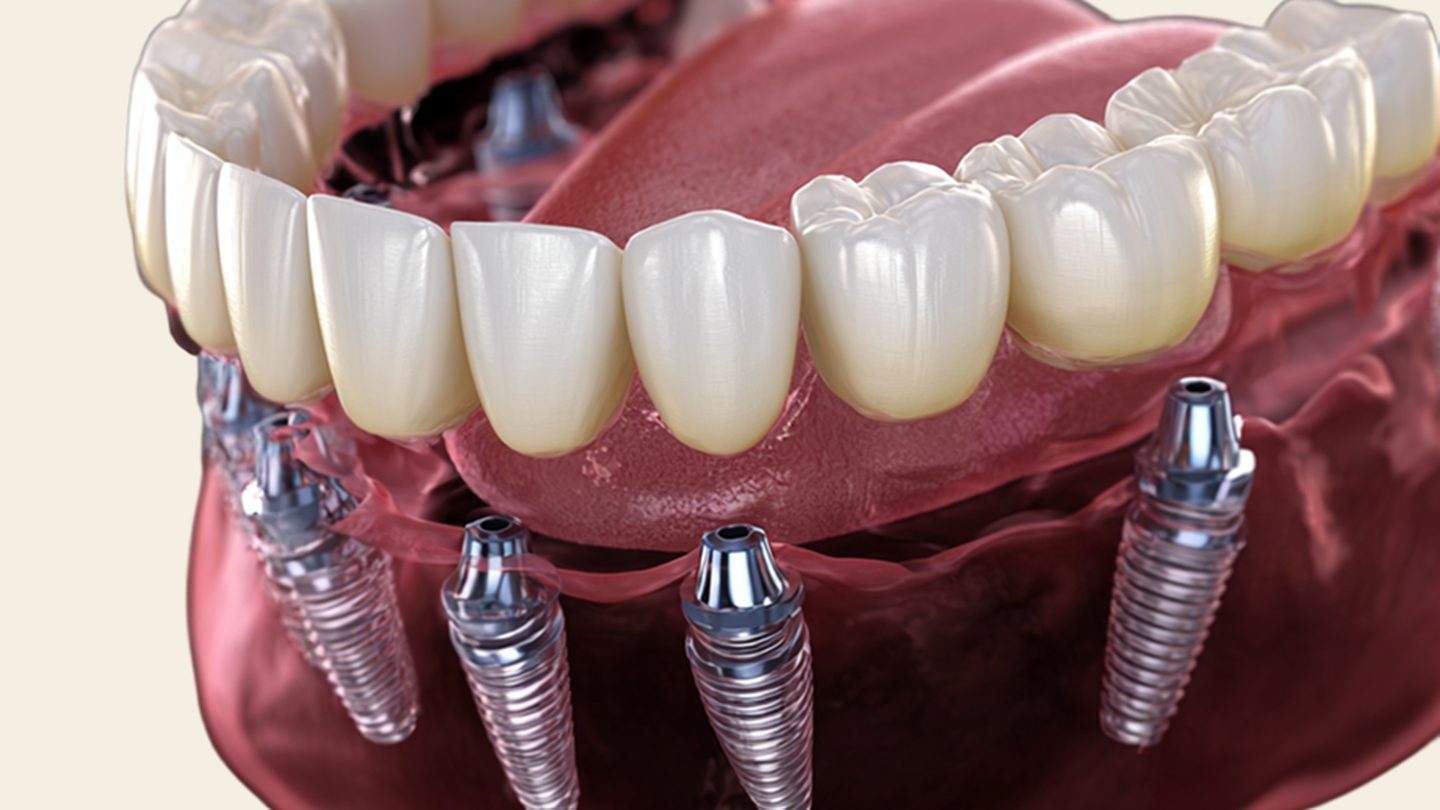
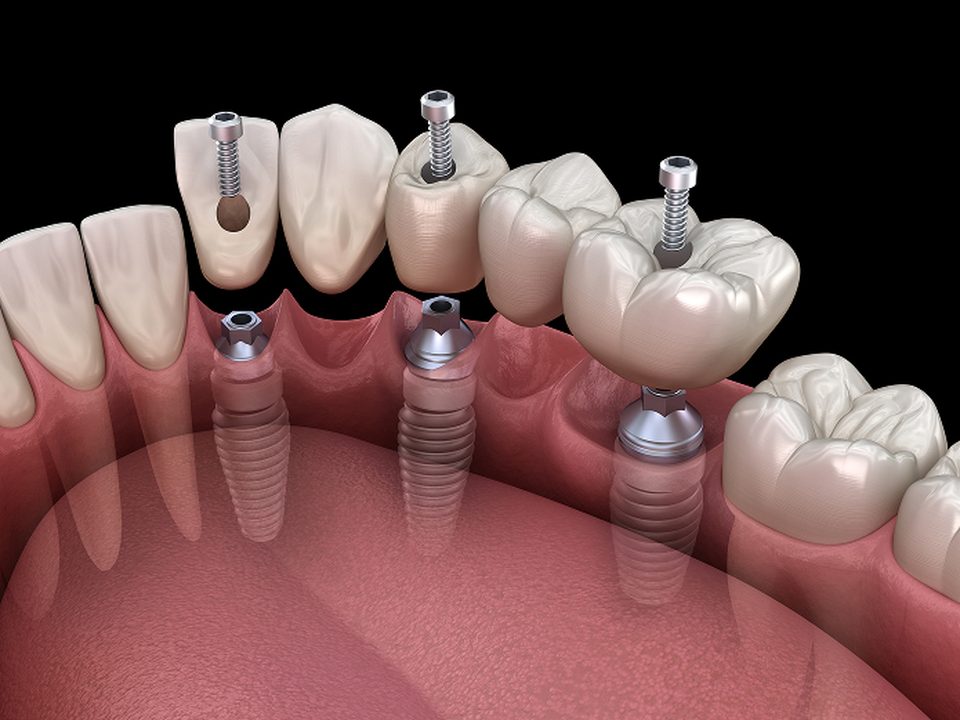
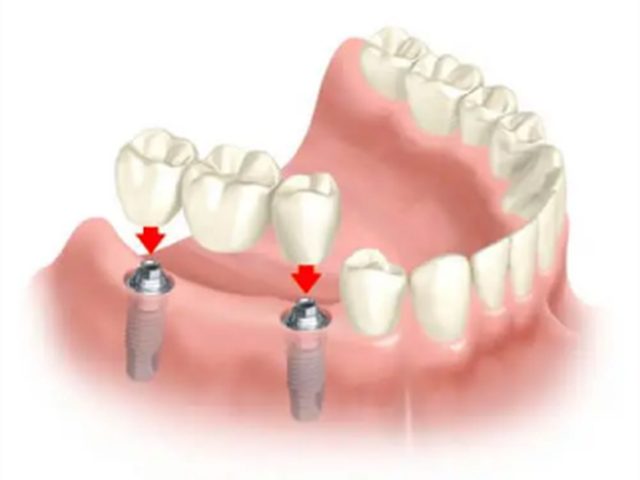
At the central Marbella clinic we resolve most implant cases: single teeth, posterior segments and implant-supported bridges. The process always starts with a CBCT scan and an intraoral scan, and each implant position is decided on the digital model, not during surgery.
That advance planning is what allows us to work with a surgical guide and small incisions. For the patient it means a shorter procedure, less swelling and, in most cases, a 24 to 48 hour recovery.
When the study shows significant bone loss or a full-arch rehabilitation is needed, the case is taken on by the group’s surgical team at our Nagüeles clinic. You do not change teams or repeat tests: same records, same clinicians.
- 3D imaging included in the first assessment.
- Surgery guided by a custom-made surgical template.
- Conscious sedation available for patients with dental anxiety.
- Fixed written quote before we start.
Types of dental implant

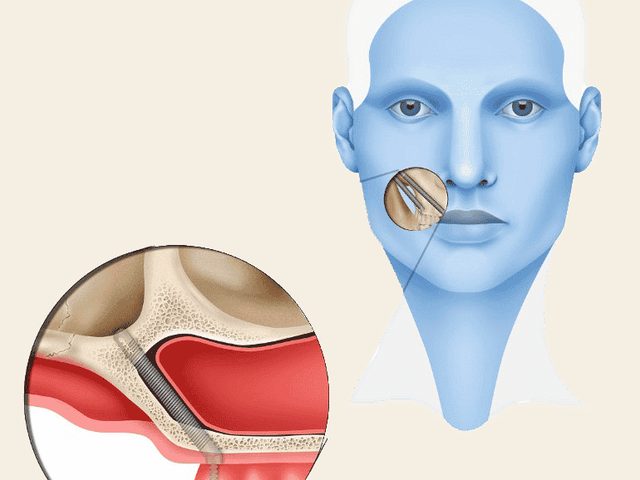
How the process works, step by step
-
Study and diagnosis
3D scan, intraoral scan and assessment of gum and bone. You leave the first visit with a diagnosis, not a generic quote.
-
Digital planning and guided surgery
We plan each implant position on the digital model and manufacture a custom surgical guide. Surgery is shorter and more precise.
-
Placement and temporary teeth
We place the implants and, where the case allows, an aesthetic temporary prosthesis the same day. You do not leave without teeth.
-
Final prosthesis and maintenance
Once the implant has integrated, we fit the definitive crown or bridge and set up a check-up plan.
Real results
Cases treated in Marbella
-
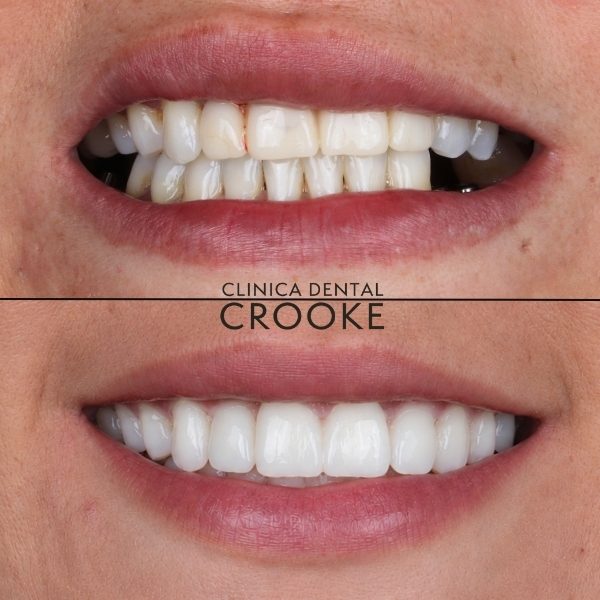
Before and after
Real cases from patients at this clinic, published with their consent. Results depend on each case and cannot be generalised.
Who carries it out
The team performing dental implants in Marbella
-

Clinical director · Implant surgeon
-

Dr. Álvaro Díaz de Alda
General dentistry
Common questions
What patients usually ask us
01 Can I have my implants done at the central Marbella clinic?
Yes, most cases are handled here: single implants, posterior segments and implant-supported bridges. If the study shows significant bone loss or a full arch needs rehabilitating, the same team carries out the surgery at our Nagüeles clinic, with no repeated tests and no change of clinicians.
02 I live abroad and come to Marbella for periods. Can treatment be planned around that?
Yes, it is a common situation among our patients. We plan the treatment so the surgical stages fall within your stays and the integration times fit your calendar. You get the full plan with dates before we start.
03 How long do I need to be in Marbella for implant treatment?
It depends on the case. Surgery and the temporary can be completed in a short stay; the definitive prosthesis requires a second visit once integration is complete. At the first assessment we give you the number of visits and their estimated duration in writing.
04 How long before I can get back to normal after surgery?
In most cases people return to their usual routine within 24 to 48 hours. We recommend avoiding intense physical exercise for the first few days and keeping to a soft diet during the first week.
05 What care do dental implants need?
The same as a natural tooth: daily brushing, interdental cleaning and regular check-ups. An implant cannot decay, but the bone supporting it can be lost if hygiene slips, so professional maintenance is part of the treatment.
06 What is the difference between an implant and a bridge?
An implant replaces the root of the tooth and does not touch the neighbouring teeth. A conventional bridge requires grinding down the adjacent teeth to rest on them. That makes the implant the more conservative option when the neighbouring teeth are healthy.
07 Can I have implants if I currently wear a denture?
Yes, and it is one of the changes that most improves quality of life. Moving from a removable denture to fixed teeth on implants restores chewing strength, removes the need for adhesives and, by not covering the palate, brings back your sense of taste.
08 When will I see the final result?
Aesthetic, functional temporaries are fitted from the outset, so there is no period without teeth. The definitive work is fitted once the implant has integrated with the bone.
09 Am I too old for implants?
Age alone is not a contraindication. What matters is general health, bone quality and gum health. We routinely treat older patients.
10 What if I do not have enough bone?
Bone regeneration, sinus lift and zygomatic implant techniques make it possible to treat cases with severe bone loss. A diagnosis of "not enough bone" often means the case needs a specific technique, not that it has no solution.
Other treatments you may be interested in

First assessment
Request your dental implants assessment in Marbella
- We call you to understand your case before proposing anything.
- Diagnosis with digital planning and a fixed written quote.
- No obligation: if you do not need treatment, we will tell you.
Prefer to talk to us directly? 951 500 100 · WhatsApp